



All-on-6 Dental Implant in Antalya, Turkey
Tooth loss is not only an aesthetic problem, especially among the elderly population, but also a serious health problem that causes low self-esteem, social withdrawal and a decrease in overall quality of life. In the past, traditional removable dentures were preferred due to cost and speed, but problems with stability, insufficient chewing force, and difficulties in use have led to patients being functionally dissatisfied.
The modern advancements of dentistry have made dental implant treatments the most predictable and reliable option for the rehabilitation of the function and the aesthetics of edentulous jaws. All-on-6 dental implants in Antalya, Turkey offer a modern approach to full-arch rehabilitation, helping patients restore oral function, improve stability and regain confidence after extensive tooth loss.
What is All-on-6 dental implants?
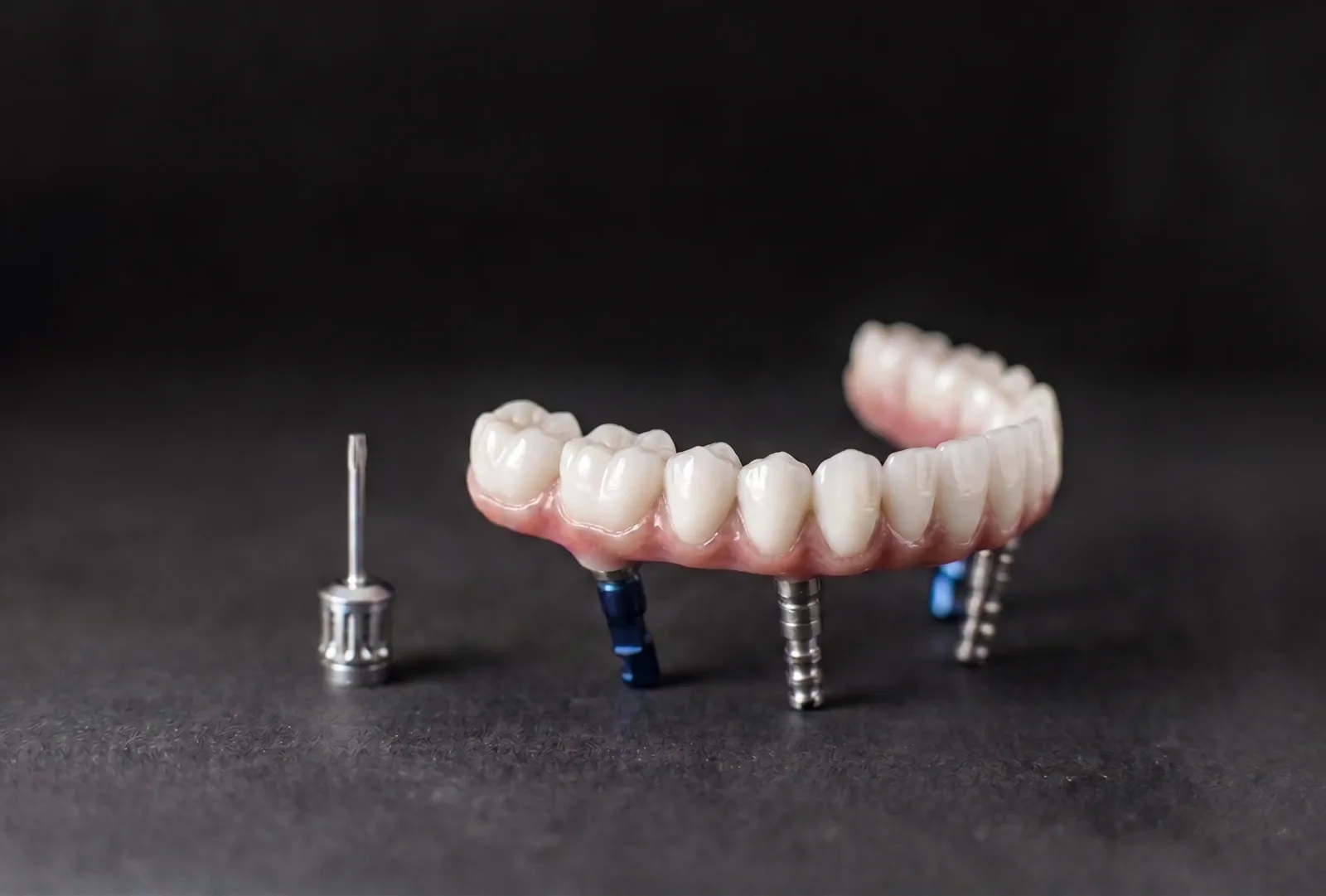
All-on-6 dental implant is a full prosthetic system mounted to six strategically placed dental implants to support a single dental arch. This method allows the chewing forces to be spread more evenly to the jawbone than with methods that use fewer implants, which gives great stability and resistance.
The implants integrate biologically with the jaw bone (osseointegration) and therefore allow for fixed teeth. It also prevents bone resorption by mimicking natural tooth roots and helps to maintain facial contours. In most cases this “graftless” approach, which eliminates the need for complicated surgeries like bone grafts, allows patients to have temporary teeth placed the same day as the operation, providing them an immediate and significant improvement in their quality of life.
Reasons for using 6 implants
There are a number of reasons for using the All-on-6 treatment concept, including biomechanical advantages and clinical success rates, particularly in the rehabilitation of completely edentulous mouths:
- Unrivalled Stability and Support: Six implants form a rock-solid foundation for supporting a full dental arch. This guarantees the prosthesis to be much more stable and resistant than techniques with fewer implants.
- Balanced Load Distribution: Having six points of support allows the pressure created during chewing (mastication) to be distributed more broadly and evenly across the jawbone. This reduces stress on each implant and contributes to the longevity of the system.
- Necessity for the Upper Jaw (Maxilla): The upper jaw bone is generally softer (less dense) than the lower jaw. Therefore, the “gold standard” is to place 6 implants in the upper jaw to compensate for bone quality and securely support the prosthesis.
- Lowering the Risk of a Cantilever (Unsupported Extension): With six implants, the unsupported extensions on the posterior of the prosthesis can be decreased or eliminated. This minimises mechanical complications like screw loosening, fracture, or implant overload.
- Preserving and Maintaining Bone Volume: Implants act as artificial roots that stimulate the jawbone, preventing post-extraction bone loss, preserving bone volume, and preventing premature facial aging.
- Lowering the Risk of Further Surgery: Strategic positioning maximizes existing bone, often avoiding invasive and expensive procedures like sinus lifts or bone grafting.
- High Success Rates: Clinical studies have shown higher survival and success rates compared to All-on-4, especially in atrophic upper jaws.
- Rigid and Durable Structure: A six-implant framework creates a stiffer, more resistant structure less prone to deformation under heavy chewing forces.
How is All-on-6 different from All-on-4?
The main difference between All-on-6 and All-on-4 is the number of implants used and the biomechanical advantages this provides. All-on-4 is suitable for patients with reduced bone mass or those seeking a more economical solution, while All-on-6 provides maximum stability, load distribution, and long-term predictability, particularly in the upper jaw.
Key Differences and Advantages
- Number of Implants: All-on-4 uses 4 implants (2 straight, 2 angled), whereas All-on-6 uses 6 implants per arch.
- Stability and Resistance: Six points of support make the base significantly more stable and minimize prosthesis movement.
- Load Distribution: Distributing chewing forces across 6 points creates a balanced load distribution and enhances overall system durability.
- Upper Jaw (Maxilla) Fit: The upper jaw is softer and less dense, making 6 implants the gold standard for higher maxillary success rates.
- Cantilever Length: Increased posterior support shortens or eliminates unsupported prosthetic cantilever extensions, lowering screw breakage risks.
- Clinical Outcomes: Studies demonstrate superior implant stability, reduced bone loss, and healthier peri-implant tissues with All-on-6.
- Cost and Complexity: All-on-6 requires more implants, prosthetic components, and strategic bone volume, making it higher in initial cost.
What is the All-on-6 implant made of?
The All-on-6 implant system comprises the following primary components:
- Dental Implants (6 Units): Six biocompatible titanium fixtures placed surgically into the jawbone for osseointegration.
- Abutments: Multi-Unit Abutments (MUA) used to establish parallelism and facilitate passive prosthesis seating, even with angled implants.
- Fixed Dental Prosthesis (Superstructure): Full-arch prosthesis screw-retained onto the multi-unit abutments.
- Internal Framework: Internal metallic or zirconia skeleton (cobalt-chromium, milled titanium, or monolithic zirconia) providing structural rigidity.
- Veneers and Teeth: Aesthetic visible portion made from zirconia, layered porcelain, composite resin, or high-impact acrylic.
- Denture Screws: Precision screws securing the prosthetic bridge to the abutments.
- Temporary Titanium Cylinders: Connecting elements used to fabricate and seat the immediate temporary prosthesis on surgery day.
Who are the right candidates for All-on-6?
All-on-6 dental implant treatment is a dependable rehabilitation method for patients meeting specific clinical and oral health standards:
Tooth Loss and Functional Needs
- Complete or Partial Edentulism: Patients missing all or most teeth in a single dental arch.
- Terminal Dentition: Patients with non-restorable, hopeless teeth due to advanced periodontal disease, deep decay, or structural trauma.
- Dissatisfaction with Removable Dentures: Patients experiencing poor retention, instability, chewing pain, or speech impediments with conventional dentures.
Anatomical Conditions
- Adequate Bone Volume: Patients possessing sufficient bone volume and density in critical implant placement zones.
- Maxillary Atrophy Patients: Patients requiring upper jaw restoration where 6 implants compensate for lower bone density.
- Patients Avoiding Grafting: Those with moderate bone loss who prefer angled implant configurations over extensive sinus lifts or grafting.
- Mouth Opening: An interincisal opening of at least 50 mm to allow proper insertion of surgical guides and instruments.
Standards for Health and Lifestyle
- General Health Status: Candidates free from uncontrolled systemic conditions (e.g., uncontrolled diabetes, active autoimmune disorders).
- Non-Smokers or Willing to Quit: Smoking impairs healing and osseointegration; candidates should ideally be non-smokers.
- Oral Hygiene Commitment: Motivation to maintain meticulous interdental cleaning and attend routine professional cleanings.
What is the process of All-on-6 implant in Antalya, Turkey?
All-on-6 treatment in Antalya is a systematic, multi-phase clinical and laboratory procedure:
Diagnosis and Phase of Digital Planning
- Imaging: 3D Cone Beam Computed Tomography (CBCT) and panoramic X-rays evaluate bone dimensions and map vital anatomical structures.
- 3D Planning: Advanced planning software simulates optimal implant angles, depths, and spatial distribution.
- Surgical Guide Preparation: 3D-printed stereolithographic surgical guides ensure guided, flapless, or micro-accurate implant placement.
Stage of Surgical Procedure
Conducted under local anesthesia, conscious sedation, or general anesthesia:
- Extraction & Preparation: Non-restorable teeth are extracted, infections debrided, and alveoloplasty performed if required.
- Implant Positioning: Six titanium implants are inserted into the jawbone, with posterior implants angled at 30–45 degrees to maximize bone use.
- Abutment Attachment: Multi-Unit Abutments (MUA) are secured to the implants at calibrated torque values.
Temporary Prosthesis and Immediate Loading
In suitable clinical cases, a temporary fixed acrylic bridge is fabricated and screw-retained on the same day or within 24–48 hours, ensuring patients never leave without teeth.
Osseointegration Process (Healing)
Biological bone-to-implant fusion occurs over 3 to 6 months (up to 8 months in low-density maxillary bone). A soft diet must be maintained during this stage.
Final Restoration (Permanent Prosthesis) Phase
- Impression Taking: Open-tray digital or elastomeric impressions record exact implant positions.
- Fittings: Bite registrations, facial bow transfers, aesthetic wax try-ins, and framework trials confirm fit, phonetics, and occlusion.
- Delivery: Final precision-milled zirconia or porcelain bridge is screw-retained to the abutments.
Recovery After All-on-6 Dental Implants in Antalya, Turkey
Bone Integration (Phase of Osseointegration)
- Biological Bond: Direct structural connection between living bone and titanium implant surface.
- Duration: Typically 3 to 6 months, extending up to 8 months in softer maxillary bone.
- Bone Remodelling: Primary woven bone is gradually replaced by dense, mature lamellar bone.
Interim Prosthesis and Function
- Immediate Function: Fixed temporary teeth restore immediate smile aesthetics and speech.
- Soft Tissue Healing: Sutures are removed around day 10–14; temporary prosthesis ensures pressure-free tissue contouring.
Post-Operative Recovery Guidelines
Oral Hygiene
- Meticulous hygiene prevents peri-implant inflammation.
- Use soft surgical toothbrushes, interdental brushes, and Super Floss daily.
Nutrition and Diet
- Maintain a soft food diet during the 3–6 month osseointegration period to protect bone healing.
- Avoid hard, crunchy, or chewy foods that could fracture temporary acrylic teeth or overload implants.
Lifestyle and Systemic Conditions
- Avoid smoking, as tobacco drastically impairs bone formation and tissue perfusion.
- Maintain stable blood glucose levels in diabetic patients.
Regular Check-ups
Attend dental check-ups every 3 months during the first year, and every 6 months thereafter for maintenance and stability verification.
All-on-6 Dental Implant Price in Antalya, Turkey
Factors Affecting Cost
- Implant Brand & Quality: Premium brands (e.g., Straumann, Nobel Biocare) vs. standard international systems.
- Prosthesis Material: Monolithic zirconia on titanium bar vs. metal-porcelain or acrylic hybrid.
- Additional Procedures: Bone augmentation or sinus lift procedures if severe anatomical atrophy is present.
- Surgeon Expertise & Technology: Specialized 3D guided surgery and custom CAD/CAM milling.
All-on-6 Cost Comparison by Country (Per Arch)
| Country | Estimated Cost (EUR) per Arch | Typical Price Range |
|---|---|---|
| Turkey | €4,200 – €8,400 | $4,500 – $9,000 |
| UK | €21,300 – €33,100 | £18,000 – £28,000 |
| USA | €25,800 – €36,900 | $28,000 – $40,000 |